Why DIY Flooring Seems Easy but Often Goes Wrong
Many homeowners prefer to undertake DIY flooring projects to save money and take pride in what they have done. DIY floor installation appears easy and quick with online videos and step-by-step instructions. On the surface, laying new floors might appear to be a weekend assignment that anyone can manage. The truth is that flooring mistakes are common and can easily turn an otherwise cost-effective concept into an expensive fix.
Flooring is not merely about laying boards or planks on the floor. It consists of planning, measuring, surface preparation, selecting the correct material, and installing everything properly. Any single action that is done poorly can bring down the entire floor. These errors may result in sloping surfaces, broken materials, and structural issues that may cost thousands to repair.
This article describes the most popular DIY flooring mistakes, such as hardwood flooring mistakes, laminate flooring installation mistakes, and vinyl plank flooring mistakes. Learning about these issues can save you money on costly repairs and help you make better choices before taking on a DIY project.
Underestimating the Importance of Floor Planning
One of the most common flooring mistakes occurs prior to the commencement of installation. The lack of proper planning leads to issues that affect the project as a whole. Common errors in floor plans include failing to measure rooms properly, failing to account for doorways, and failing to consider the flow of the flooring between rooms.
A lot of homeowners get into DIY flooring installation without a proper plan. They might purchase insufficient material or overlook waste, cuts, and subsequent repairs. When a project runs out of flooring midway, the floor could turn out differently in colour or style if that product is no longer in stock.
Another typical floor plan mistake is neglecting the shape of rooms and traffic patterns. The wrong choice of layout can also make rooms look small or clumsy. To look professional, it is important to plan the direction of the flooring and how it joins the room.
Skipping Proper Subfloor Preparation
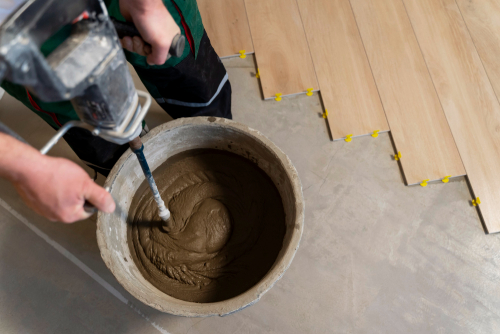
Omitting subfloor preparation is one of the most costly DIY floor installation mistakes. The flooring is supported by the subfloor. Your new floor will not perform well if it is uneven, dirty, or damaged.
Most DIY installers assume the subfloor is good as long as it appears solid. However, tiny dips, bumps, or water problems can lead to severe problems in future. Lack of even floors causes squeaking, rolling planks, and gaps. Moisture under the floor can cause warping, mould, and permanent damage.
Correct preparation consists of cleaning, levelling, repairing damaged areas, and checking moisture levels. When these steps are ignored, they can save time in the short term, but this can be very expensive in the long run due to repair costs.
Hardwood Flooring Mistakes That Damage Your Investment
Hardwood floors are exquisite, durable, and costly. Hardwood floor installation can be particularly dangerous when done as a DIY project, since hardwood is highly sensitive to moisture, temperature, and installation methods. Probably one of the most widespread DIY hardwood flooring mistakes is failing to acclimate the wood properly.
Hardwood floors require time to adapt to home temperature and humidity. Failure to take this step may lead to boards expanding or shrinking after installation. This results in gaps, buckling, or cupping that are hard and costly to repair.
Improper fastening is another problem in DIY hardwood flooring installation. Wrong nails, improper placement of the nails, and not fixing boards correctly may result in loose boards and squeaky floors. Inappropriate alignment during installation may also lead to uneven seams and an unprofessional look.
Mistakes in hardwood flooring may require complete removal and reinstallation. This implies changing the damaged boards and hiring labour again, which may soon be costly.
DIY Laminate Flooring Installation Mistakes
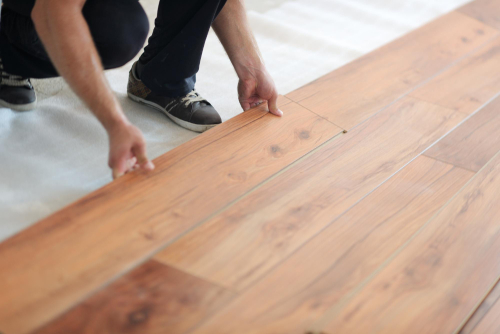
Laminate flooring is common due to its low cost and promotion as easy to install. Nevertheless, the installation of DIY laminate flooring still requires precision and planning. Failure to leave adequate expansion space is one of the most prevalent errors in the installation of laminate floors.
Laminate flooring contracts and expands with changes in temperature. When flooring is fitted too closely against walls or fixed objects, it has nowhere to move. This may result in buckling, lifting, and plank gaps.
Another common mistake is improper locking of the planks. Laminate flooring uses a locking mechanism to hold it in place. Boards that are not clicked together correctly can become separated over time. This leaves gaps that are visible and vulnerable, and under pressure, they may break.
Another severe mistake is to install laminate flooring on uneven subfloors. Small flaws are enough to flex laminate planks, resulting in damaged joints and a reduced lifespan.
Vinyl Plank Flooring Installation Mistakes to Avoid
Vinyl plank flooring is very popular due to its water-resistant and durable properties. Vinyl plank flooring installation errors are highly prevalent in DIY projects, yet many homeowners consider it foolproof.
Among the key errors is applying the vinyl planks on an uneven surface. Vinyl can be flexible on the surface, but it has flaws on the inside. Problems with subfloors may lead to visible lines, gaps, and a gradual rise over time.
The other issue arises when homeowners select the wrong type of vinyl plank for their space. Not every type of vinyl flooring is made for heavy-traffic environments, high-moisture areas, or temperature variation. The wrong product will result in peeling, curling, or premature wear.
Poor adhesive application or improper placement of the planks throughout the installation process also causes long-term problems. Vinyl plank flooring mistakes are usually expensive to repair since a large part of the floor has to be removed, which is frustrating.
Ignoring Moisture and Environmental Conditions
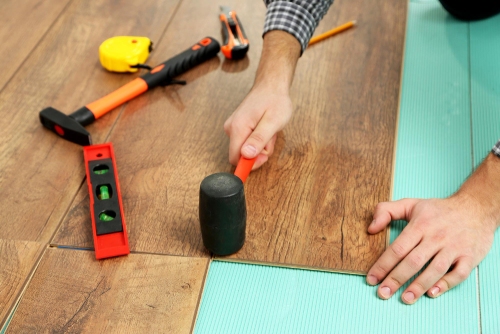
One of the biggest enemies of flooring is moisture. Many DIY flooring installation projects fail due to improper testing and moisture management. This error occurs with hardwood, laminate, and vinyl.
Flooring installed in basements, kitchens, or bathrooms without appropriate moisture protection swells, grows mould, and collapses. Concrete subfloors may also release moisture, which can damage flooring materials over time.
Environmental factors, including temperature and humidity, also contribute. Flooring under extreme weather conditions without climate regulations may lead to expansion or contraction of materials after installation. The effects of these changes include gaps, buckling, or warped boards.
Using the Wrong Tools and Materials
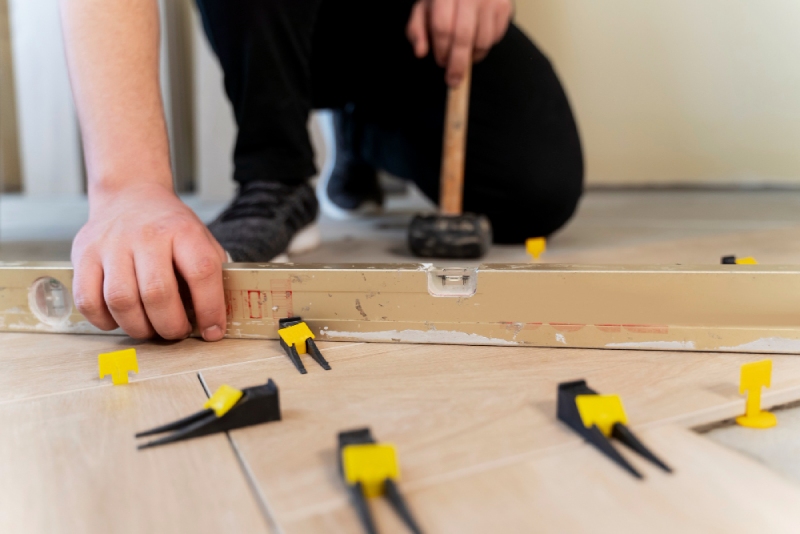
The failure of DIY projects is usually due to homeowners’ poor choice of tools or materials. The flooring installation process necessitates particular cutting, spacing, levelling, and fastening tools. Using the wrong tools will amplify the chances of errors and injuries.
Another prevalent problem is the use of erroneous underlayment, adhesives or fasteners. Each type of flooring has specific requirements. Product mixing or the use of non-recommended materials may invalidate a warranty and reduce the lifetime of the floor.
Most flooring mistakes are due to misinterpretation or disregard of instructions. Professional installers are well-trained to adhere to manufacturers’ guidelines, minimizing the risk of an expensive mistake.
Poor Transitions and Finishing Work
The finishing touches and transitions are usually ignored in DIY projects. Lack of proper transitions between rooms or flooring types may appear unsightly and pose a tripping hazard.
Incorrect trimming around walls, door frames, and cabinets also affects the final appearance. Uneven edges, gaps, and visible seams make the floor appear unfinished and lower the home’s value.
Removal and installation of parts of the flooring may be necessary to repair finishing errors. This introduces time and cost that might have been saved through appropriate planning and expertise.
Long-Term Costs of DIY Flooring Mistakes
Initially, DIY flooring might appear to be less expensive than contracting experts. Nevertheless, errors in flooring usually incur unseen expenses. Repair, replacement, and wasted materials accumulate quickly.
Poorly installed flooring may cause damage to the subfloor or to the home’s structure in some situations. Moisture problems may require mould remediation, which is costly and disruptive. Incorrect installations may also lower resale value, as buyers notice uneven or damaged floors.
Numerous homeowners find themselves hiring professionals to fix DIY mistakes. This tends to be more expensive than employing professionals initially.
When DIY Flooring Is Not Worth the Risk
Small, low-risk projects could be done using DIY flooring installation. But massive spaces, costly materials, and complex arrangements increase the risk of costly errors. Experience and accuracy are needed, especially with hardwood flooring.
It is important to know your skill level and the project’s requirements. Professional installation is usually the safer and cheaper option when errors may cost thousands.
Conclusion: Protect Your Home and Your Budget
Errors in DIY flooring may make a simple project a nightmare in terms of financial investments. Between poor planning and subfloor problems, as well as hardwood flooring mistakes and vinyl plank flooring installation mistakes, the costs are real and significant.
Flooring is a long-term investment that influences comfort, safety, and house value. When it comes to DIY hardwood or laminate flooring installation, shortcuts can result in repairs that are much more expensive than professional installations.
Moore Flooring Design+ is the place to go in case you have new flooring ideas and need expert advice. Our team offers quality materials, professional consultation, and installation so that your floors are done right, once. Contact us today to avoid costly flooring mistakes and have beautiful, durable floors that add value to your home.